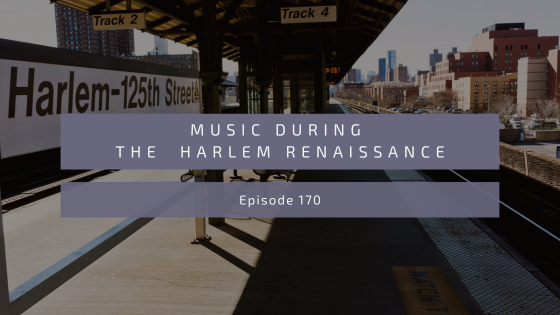
About 100 years ago in Harlem, if a family was short on rent, they might throw a “rent party.” Neighbors paid a small amount to come in, eat, and dance, and a pianist would play late into the night. Some of the greatest piano players in American history got their start at those parties, inventing a dazzling style called stride piano along the way. We first shared this episode for Black History Month, and today we’re traveling back to Harlem to explore its music.
What was the Harlem Renaissance?
The word renaissance means “rebirth.” During the 1920s and 1930s, Harlem, a neighborhood in New York City, became a gathering place for African American writers, artists, and musicians creating fresh ideas and sharing their voices with the world.
Many families had moved to Harlem from the South during the Great Migration, bringing their own musical traditions with them. When all those styles came together in one vibrant neighborhood, something extraordinary happened.
In this episode, you’ll:
- Meet some of the influential artists who helped define Harlem’s sound
- Explore famous Harlem venues where music and dancing filled the night
- Listen to examples of jazz, blues, and big band music
Listen along
Explore our Harlem Renaissance playlist, and as you listen, see if you can spot:
- A steady beat that makes you want to tap your foot
- Instruments taking turns playing solos
- Fast piano patterns
- Bright brass sounds like trumpets and trombones
Try it at home: a stride piano left hand
Stride pianists kept the beat going with their left hand by jumping back and forth between a low note and a chord in the middle of the keyboard. Have your kids try it slowly: play a low C, then a C-E-G chord higher up, and repeat (low note, chord, low note, chord). It’s the same “oom-pah” feeling from our Oktoberfest episode, with a lot more swing. Speed it up only if your kids want a challenge.
Coming up next
Next time, we’ll meet composer Margaret Bonds, who worked closely with Harlem Renaissance poets and blended classical music with spirituals and jazz, carrying the movement’s spirit into concert halls and classrooms.
For more music history, you might also enjoy our episodes on George Gershwin, who was deeply influenced by Harlem’s music, and Blind Tom Wiggins.
Keep listening, keep learning, and keep making music.
Links mentioned in this episode: